 A Proximity Concept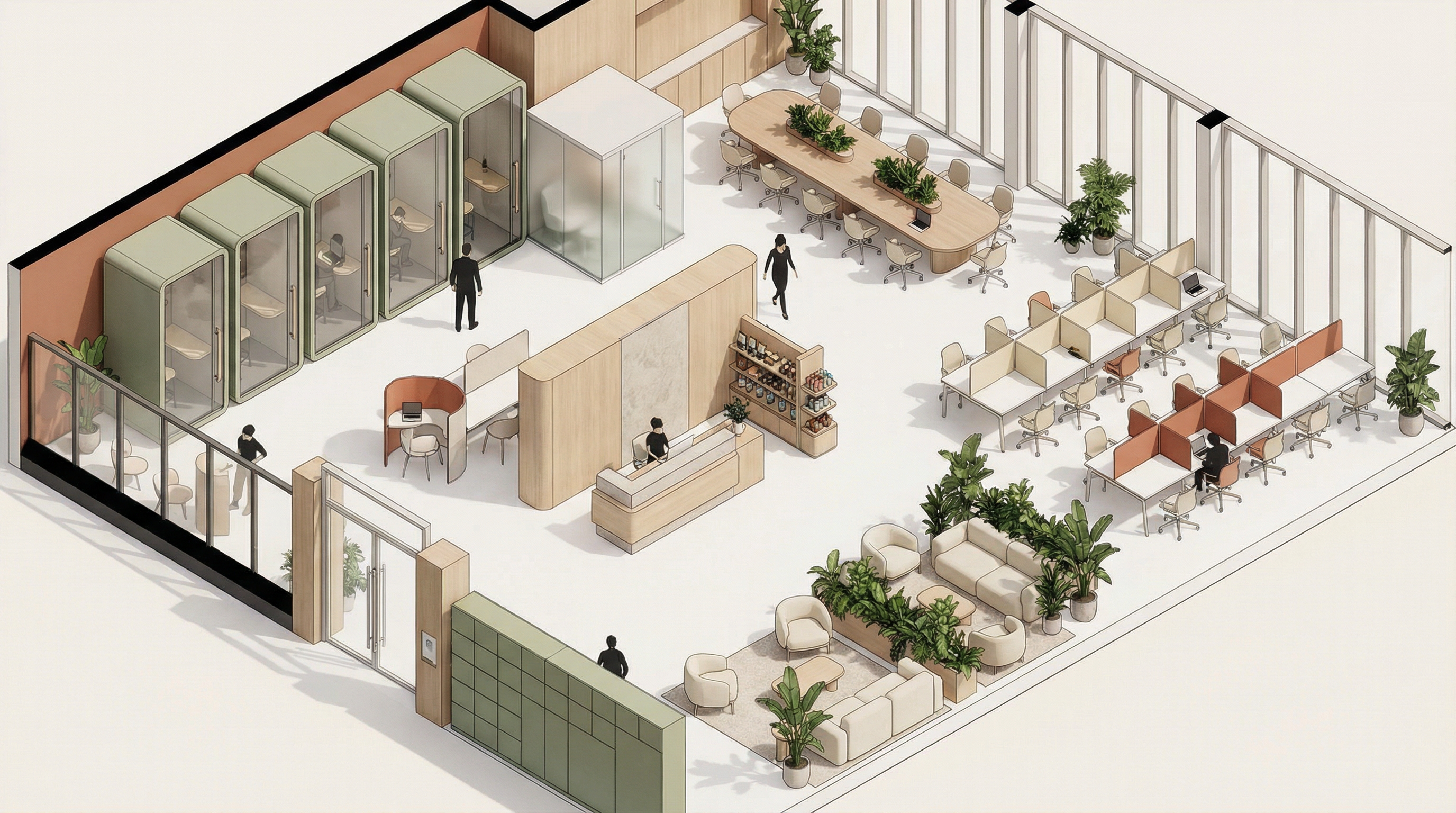
A Unique Moment
in Time
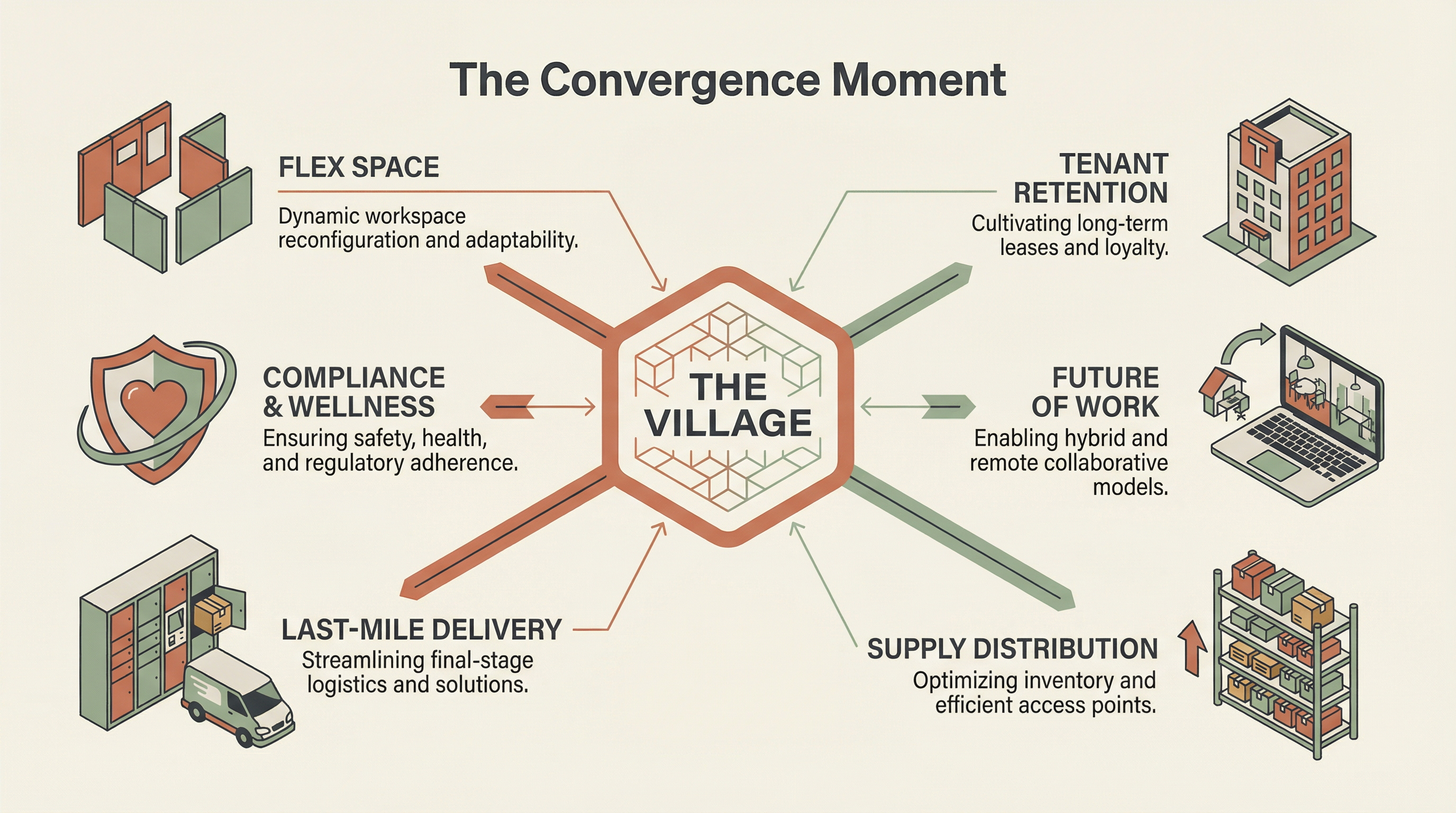
We are witnessing a rare convergence of forces: the traditional office model is fractured, tenant expectations have permanently shifted, and the infrastructure for a new kind of workspace is finally mature. The Village is not an incremental improvement — it is a disruption engine that redefines how buildings operate, how work gets done, and how value flows through commercial real estate.
Flexibility as a Service
The ability to flex in and out of space dynamically. Static square footage becomes an agile, bookable asset that responds to real-time demand.
The Retention Engine
Amenities that actually drive tenant loyalty and lease renewals — not expensive showpieces that sit empty. The Village gives tenants a reason to stay.
Where Work Gets Done
The future of work isn't in the corner office. It's in the lobby, the ground floor, the apartment complex. The Village brings workspace to where people already are.
Supply Distribution & Retail
A new kind of retail footprint. Office supplies, equipment, and essentials distributed where the work happens — not in a strip mall across town. Self-service, non-staffed, always available.
Last-Mile Delivery
Integrated smart lockers and self-service vending that solve the final hurdle of corporate and personal logistics. Packages and supplies arrive where you work, not where you used to work.
Compliance as an Amenity
Federal law requires companies with 50+ employees to provide private lactation spaces. The Village solves this building-wide, saving every tenant the cost and footprint.
The Vacancy Crisis &
The Broken Amenity Model
U.S. office vacancy hit a record 20.6% in Q2 2025, according to Moody's Analytics — up from 17% at the start of the pandemic. That translates to roughly 900 million square feet of empty office space nationwide, equivalent to approximately 300 One World Trade Centers sitting dark.
Meanwhile, the amenities designed to attract tenants are failing. Office utilization rates have declined 7.5% annually since 2020, and only 40% of employees regularly use their office spaces. Landlords invest millions in world-class amenities, then outsource the relationship to third-party operators who own the brand, the data, and the tenant connection.
"95% of tenants don't know who their landlord is. The current strategy of hiring a 3rd party management company to operate all your amenities is one of the reasons why that number makes perfect sense."
— Mike Flanagan, Investor/CRO at Proximity & Partner at Rubix CRE
The Ownership Fragmentation Problem
When a landlord hires a third-party amenity operator, the tenant's daily experience — the fitness center, the conference center, the hospitality desk — gets filtered through someone else's identity. The landlord doesn't just lose the relationship. They lose the narrative. The solution must be conceived at the portfolio level: a unified strategy that keeps the landlord's brand and culture front and center.
Sources
- [1] Moody's Analytics — U.S. Office Vacancy Q2 2025 (via Allwork.space, Jul 2025)
- [2] Moody's Analytics — "902M sq ft vacant" data story (Sep 2024)
- [3] CBRE — Office utilization data, H1 2023 (via Density.io)
- [4] Site Selection Group — Utilization decline rates, Aug 2025
- [5] CommercialCafe — National Office Report, Feb 2026 (17.6% current rate)
The Flex Village
A turnkey, modular workspace ecosystem deployed into 2,000–8,000+ square feet of vacant or underutilized space. The Village transforms a building liability into a revenue-generating amenity in weeks, not months — and it can be relocated to another floor or building with minimal friction if the space gets leased.
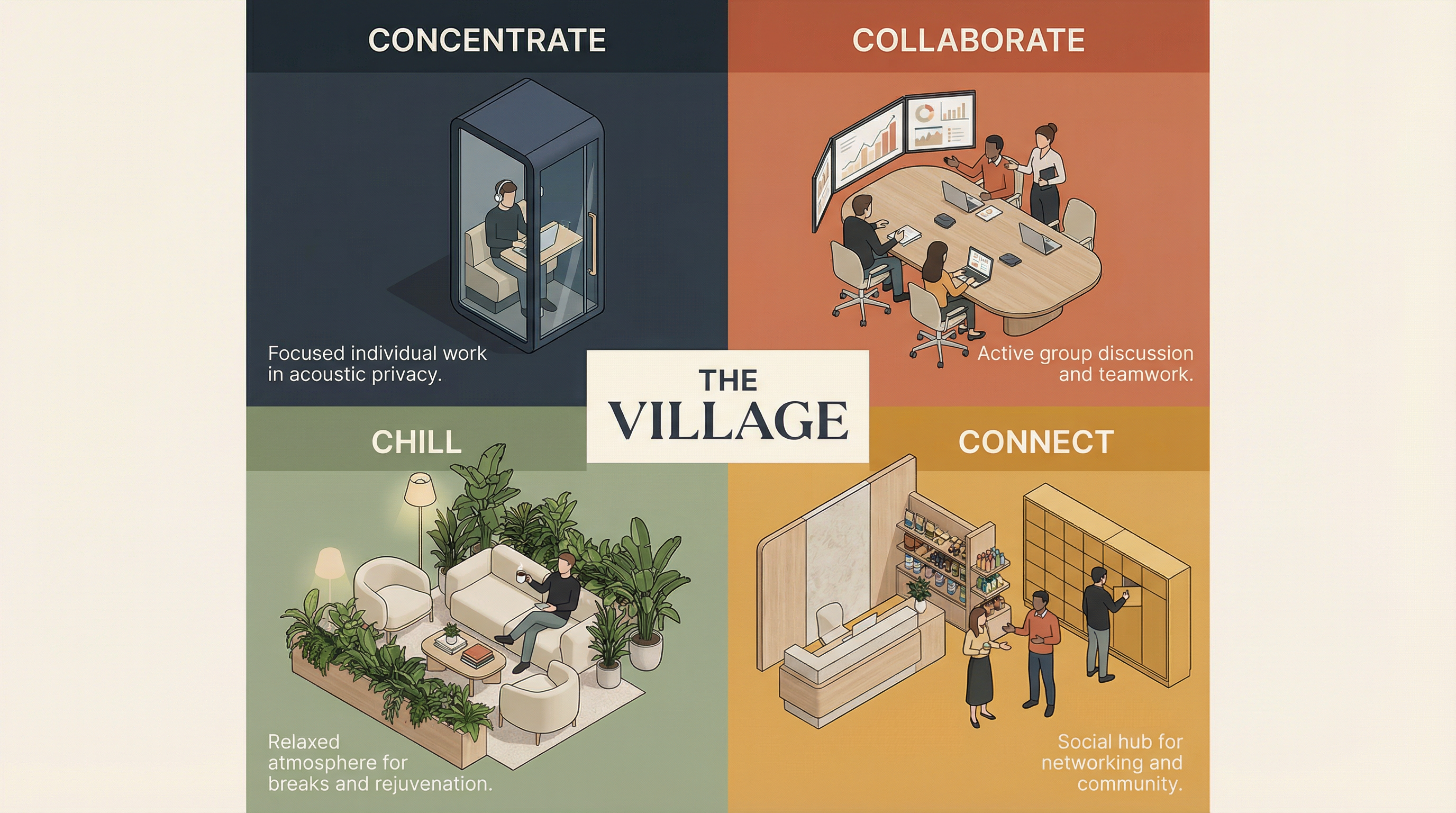
The 4C Design Theory
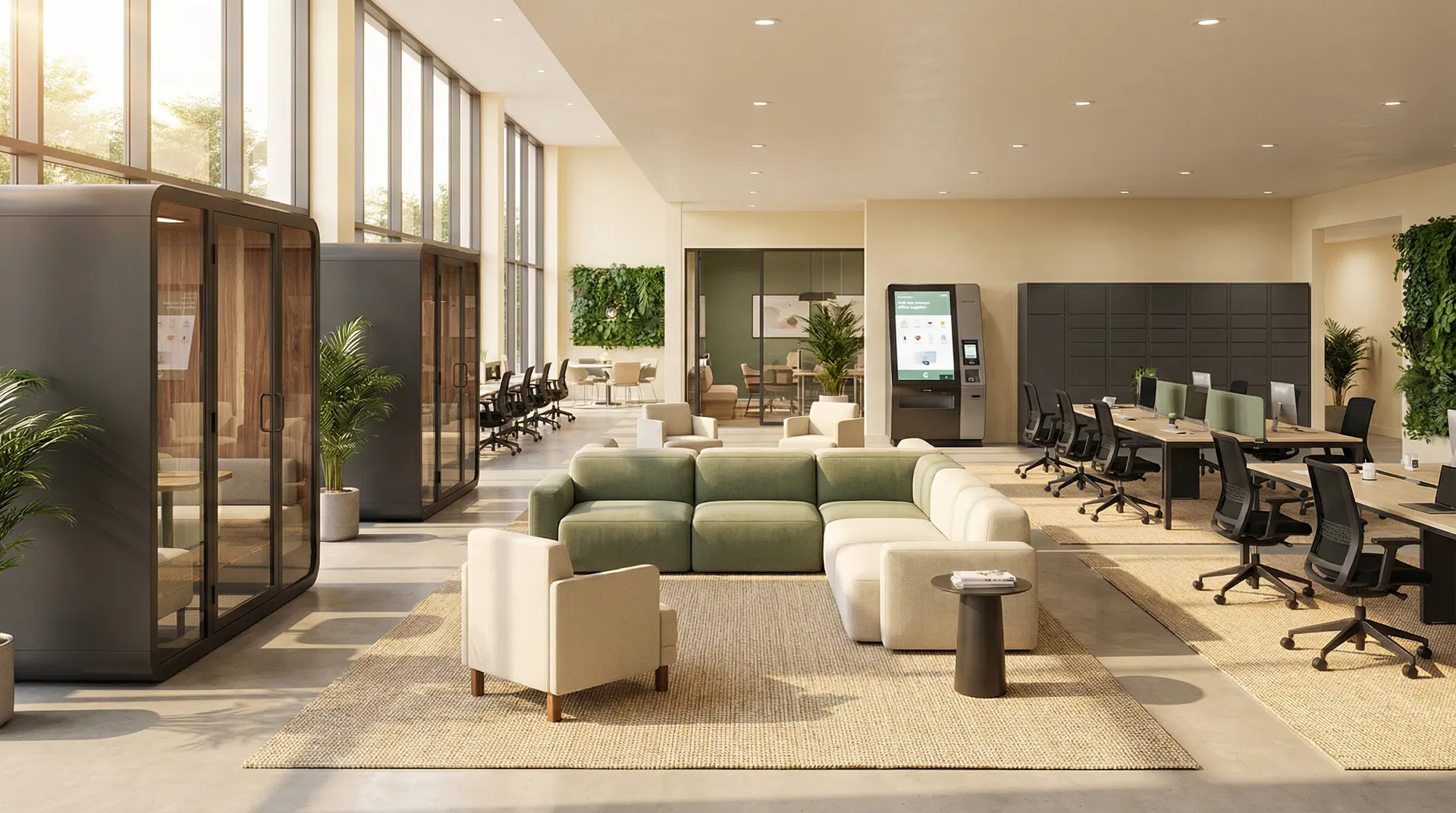
Conceptual rendering — The Village integrates privacy pods, collaboration zones, self-service supply kiosks, and smart delivery lockers into a single cohesive environment.
Excessively Modular
Built like blocks. Every component — pods, desks, lockers, kiosks — is freestanding and relocatable. If a space gets leased, the entire Village moves to another floor in days.
Technology-Unified
Every resource — meeting rooms, pods, lockers, kiosks — is bookable, trackable, and billable through a single platform. The landlord retains the brand and the data.
The Showroom Effect
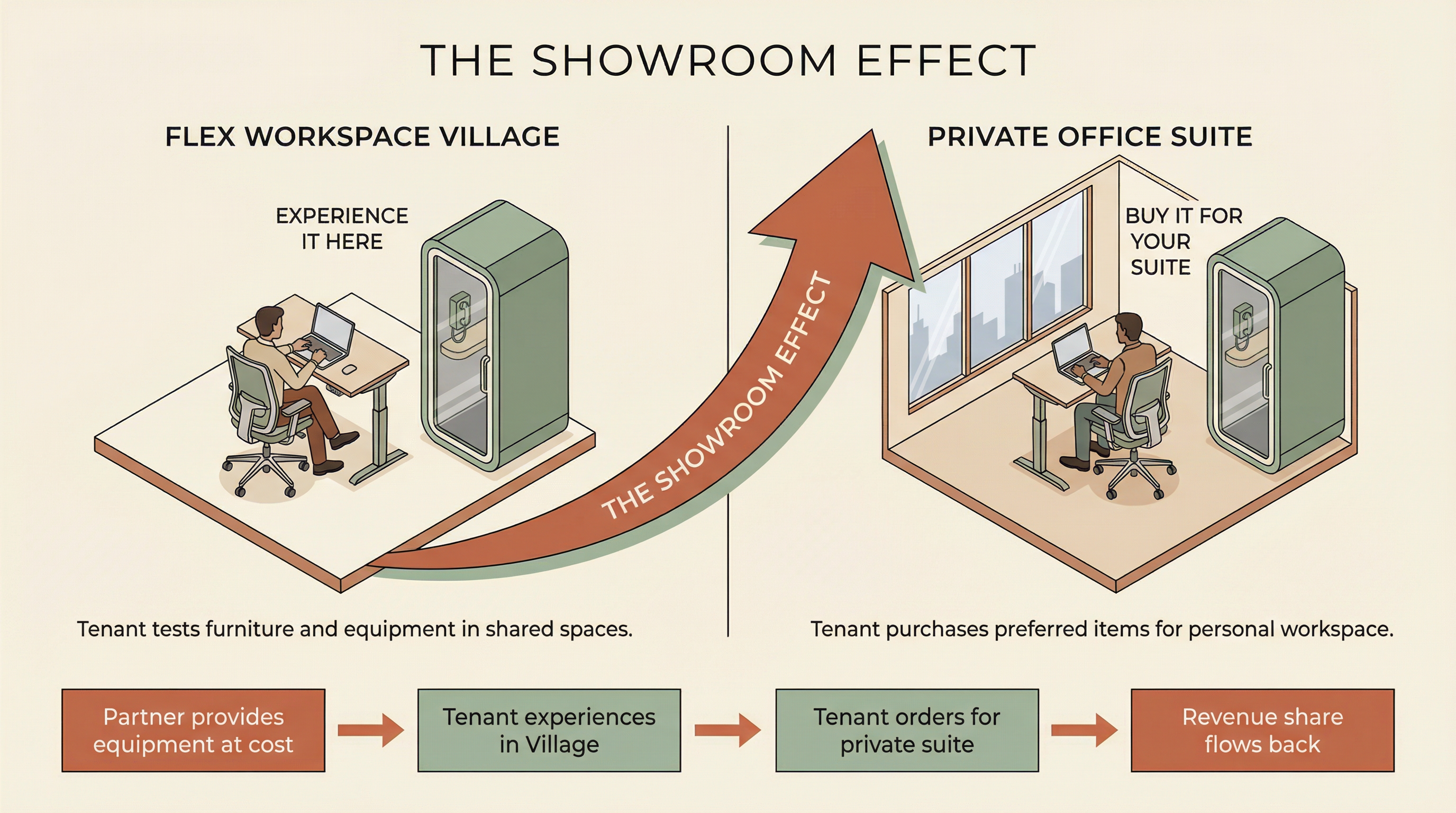
Tenants experience the pods, furniture, and technology in the Village, then purchase them for their private suites upstairs. The lobby becomes a live showroom that drives upstream revenue.
Experience It Downstairs.
Buy It for Your Suite.
The Village functions as a live showroom. When a tenant uses a TalkBox privacy booth in the shared space and realizes their team needs three of them on their floor, the sale happens organically. When a facilities manager sits in an ergonomic chair for a week and orders forty for the office, that's the Showroom Effect in action.
Partners provide equipment at cost for the Village deployment. Tenants experience it, order for their private suites, and revenue share flows back through the ecosystem.
A Plug-and-Play
Partnership Model
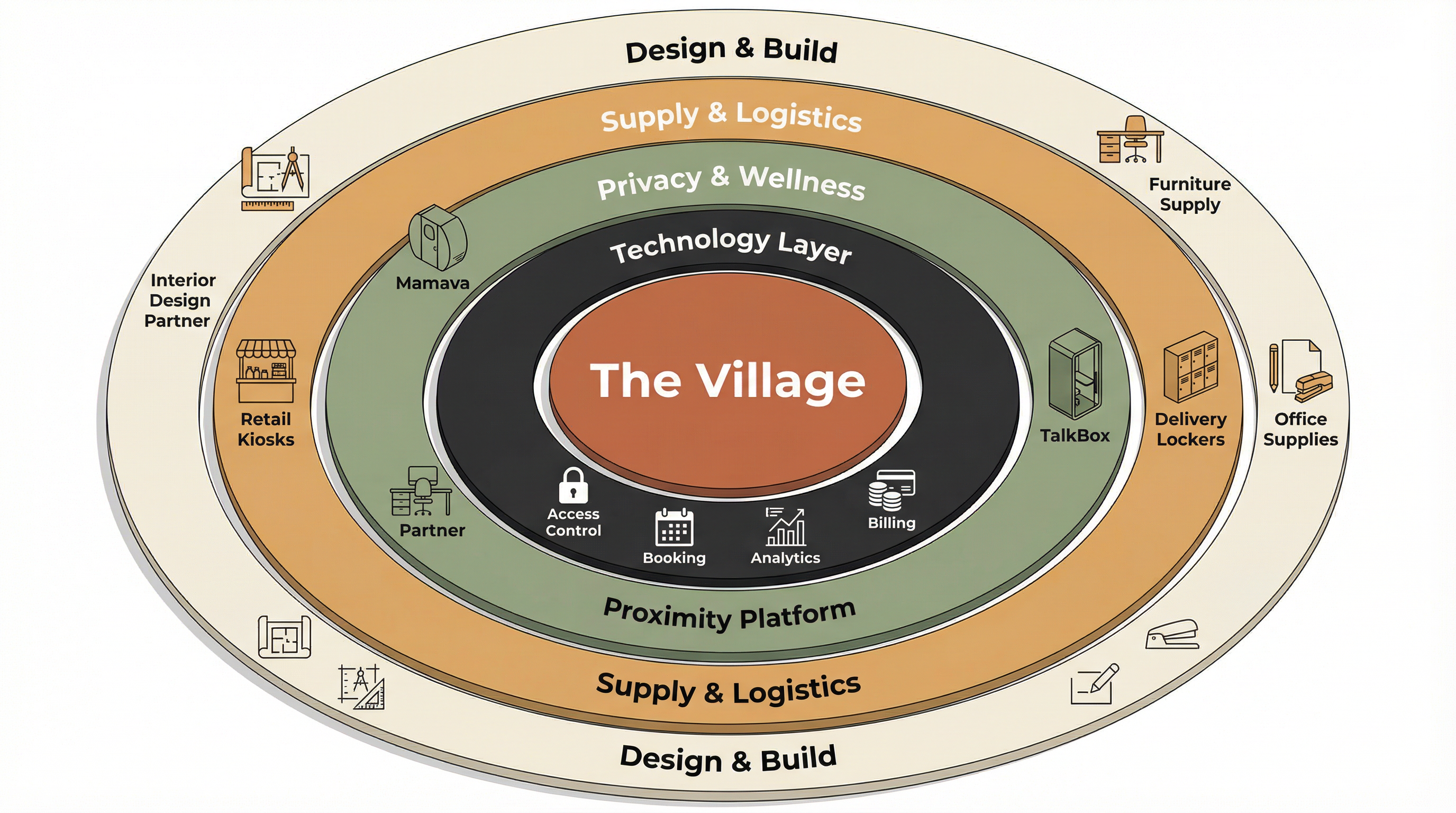
The Village is powered by a coalition of best-in-class partners, unified by a single technology layer. Each partner is modular — they can be added or removed based on the building's needs and the audience for this presentation.
The Technology Layer:
The connective tissue — always present
Proximity is the hospitality-focused operating platform that unifies the entire Village. Unified access control, smart booking, visitor management, billing, and real-time analytics — all white-labeled under the landlord's brand. The landlord retains the data, the relationship, and the narrative. Every pod, desk, locker, and conference room is searchable, bookable, and billable through a single interface.
The Privacy & Wellness Layer: Mamava + TalkBox
TalkBox — Soundproof Privacy Booths
Single and multi-person soundproof pods for deep focus work, confidential calls, and video meetings. The most requested amenity in modern offices — deployed as freestanding units that require no construction.
Mamava — Lactation & Wellness Pods
Freestanding lactation pods that solve a critical compliance need. The PUMP Act requires employers with 50+ employees to provide private, functional lactation spaces. By deploying Mamava pods as a building-wide amenity, the landlord solves this requirement for every tenant simultaneously — saving each company the cost and footprint of building their own dedicated room.
Compliance Value Proposition
Companies with 50+ employees must provide private lactation space (PUMP Act, 2022). A single Mamava pod in the Village serves every qualifying tenant in the building — turning a legal burden into a building-wide amenity that drives retention.
The Supply & Logistics Layer
Furniture, supplies, last-mile delivery & self-service retail
This layer represents a fundamental rethinking of where office supplies are distributed and where the retail footprint of an office supply company can exist. The Village becomes a hyper-local distribution hub — a micro-retail presence embedded directly where the work happens. A national supply partner with existing logistics infrastructure is uniquely positioned to own this category.
Furniture & Equipment
Ergonomic desks, chairs, and workspace furniture deployed at cost in the Village. Tenants experience it, then order for their suites — the Showroom Effect in action.
Self-Service Supply Vending
Non-staffed, automated vending kiosks stocked with high-demand office essentials — pens, notebooks, cables, headphones, chargers. Think CVS vending meets the modern office. Always available, zero labor cost.
Last-Mile Smart Lockers
Smart lockers for same-day delivery of corporate and personal packages. The final hurdle of logistics, solved at the building level. Capex-to-Opex financing available.
The Design & Build Layer
Interior design partners handle space planning, aesthetic integration with the building's existing design language, and rapid deployment coordination. They ensure the Village feels intentional and premium, not like a pop-up.
Redefining
Building Economics
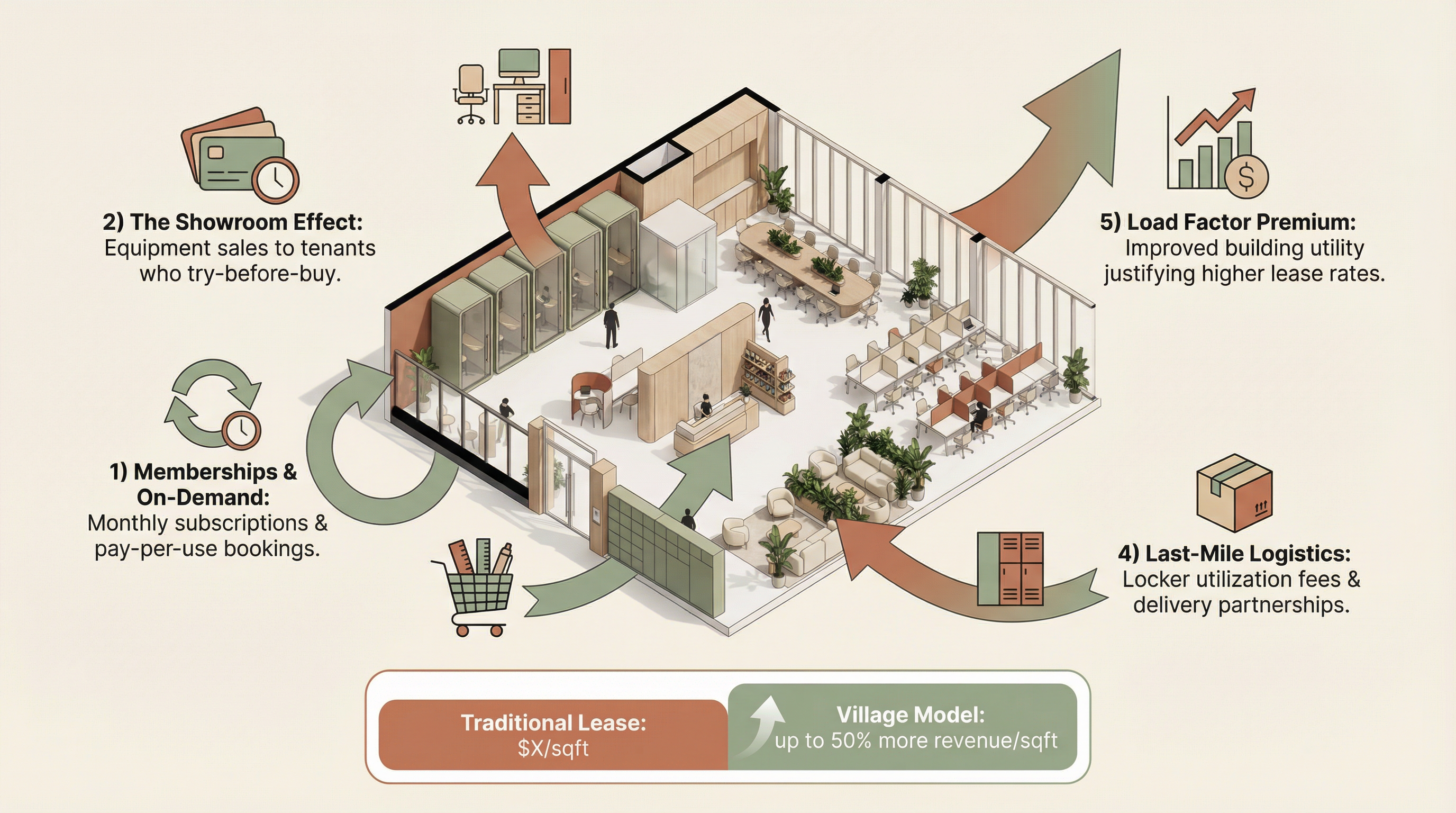
The Village doesn't just fill empty space — it creates multiple, compounding revenue streams that traditional leasing cannot match. Property owners converting to flex consistently report 40–60% higher revenue per square foot compared to traditional leases, while lifestyle office markets command a 32% rent premium over standard Class A space.
Sources: Lornell RE, Dec 2025; JLL Lifestyle Office Markets Report, Sep 2025
Memberships & On-Demand
Monthly subscriptions for building tenants and on-demand pay-per-use bookings for conference rooms, pods, and desks. Managed entirely through the Proximity platform.
The Showroom Revenue
Revenue share on equipment, furniture, and pods sold to upstairs tenants who "try before they buy" in the Village. The lobby drives upstream purchasing decisions.
Retail, Vending & Logistics
Revenue from self-service supply vending, locker utilization fees, and last-mile delivery partnerships. A new micro-retail footprint that generates revenue where the work happens — zero staffing required.
Load Factor Premium
Under BOMA 2024 standards, shared flex components function as building amenities included in the load factor. This improves the building's utility and justifies premium lease rates across the entire property.
Capex-to-Opex Model
Partners finance the physical buildout. The landlord pays a monthly operational fee or enters a revenue-share agreement — eliminating the massive upfront capital expenditure barrier.
Data-Driven Optimization
Real-time analytics through Proximity reveal exactly who uses what, when, and why they stop. This data informs pricing, layout optimization, and tenant engagement strategies across the portfolio.
Last-Mile Supply
at the Point of Work
The traditional office supply retail model — large-format stores in strip malls — is being disrupted by the same forces reshaping commercial real estate. As work decentralizes, the supply chain must follow. The Village creates an entirely new distribution channel: self-service, non-staffed, automated vending placed directly where knowledge workers are.
Think of how CVS pioneered automated health kiosks in airports and offices. The same model applied to office supplies — chargers, headphones, notebooks, cables, pens, adapters — creates a zero-labor, high-margin micro-retail presence in every building with a Village deployment.
Why This Matters for a National Supply Partner
- New physical retail footprint without new leases or staffing
- Data on what knowledge workers actually buy, where and when
- Recurring revenue from vending + smart locker utilization
- Showroom-to-suite pipeline for furniture and equipment
- Brand presence in premium commercial buildings nationwide
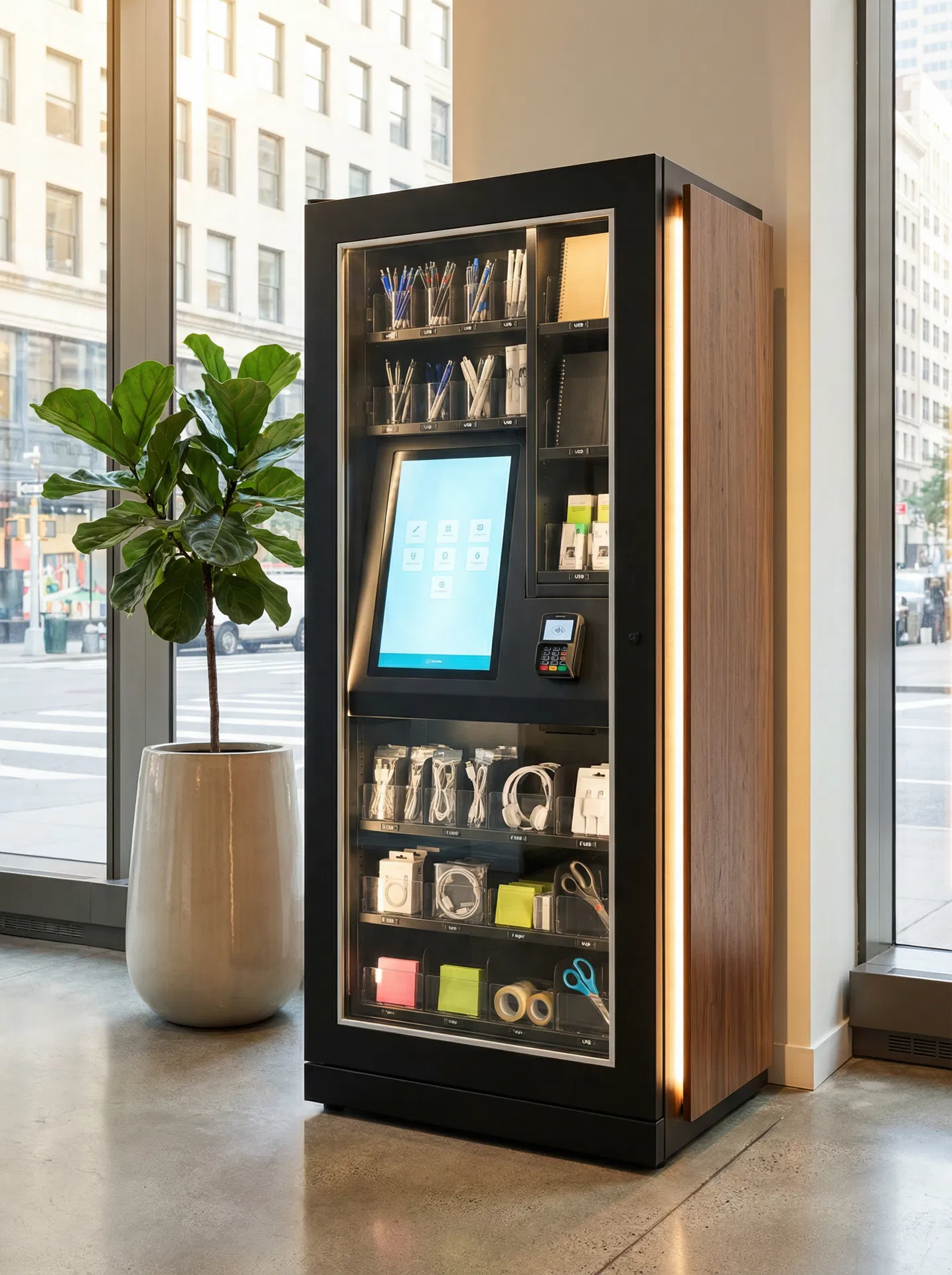
Concept rendering — Self-service supply vending kiosk with touchscreen interface, contactless payment, and curated office essentials. Zero staffing, 24/7 availability.
Adaptive Spaces
for Every Need
The Village scales from a compact 2,000 sq ft deployment to a full 8,000+ sq ft ecosystem. Every configuration includes the core 4C zones — Concentrate, Collaborate, Chill, and Connect — adapted to the available footprint.
Compact Village — 2,000 sq ft
Multifamily amenity floor or small commercial lobby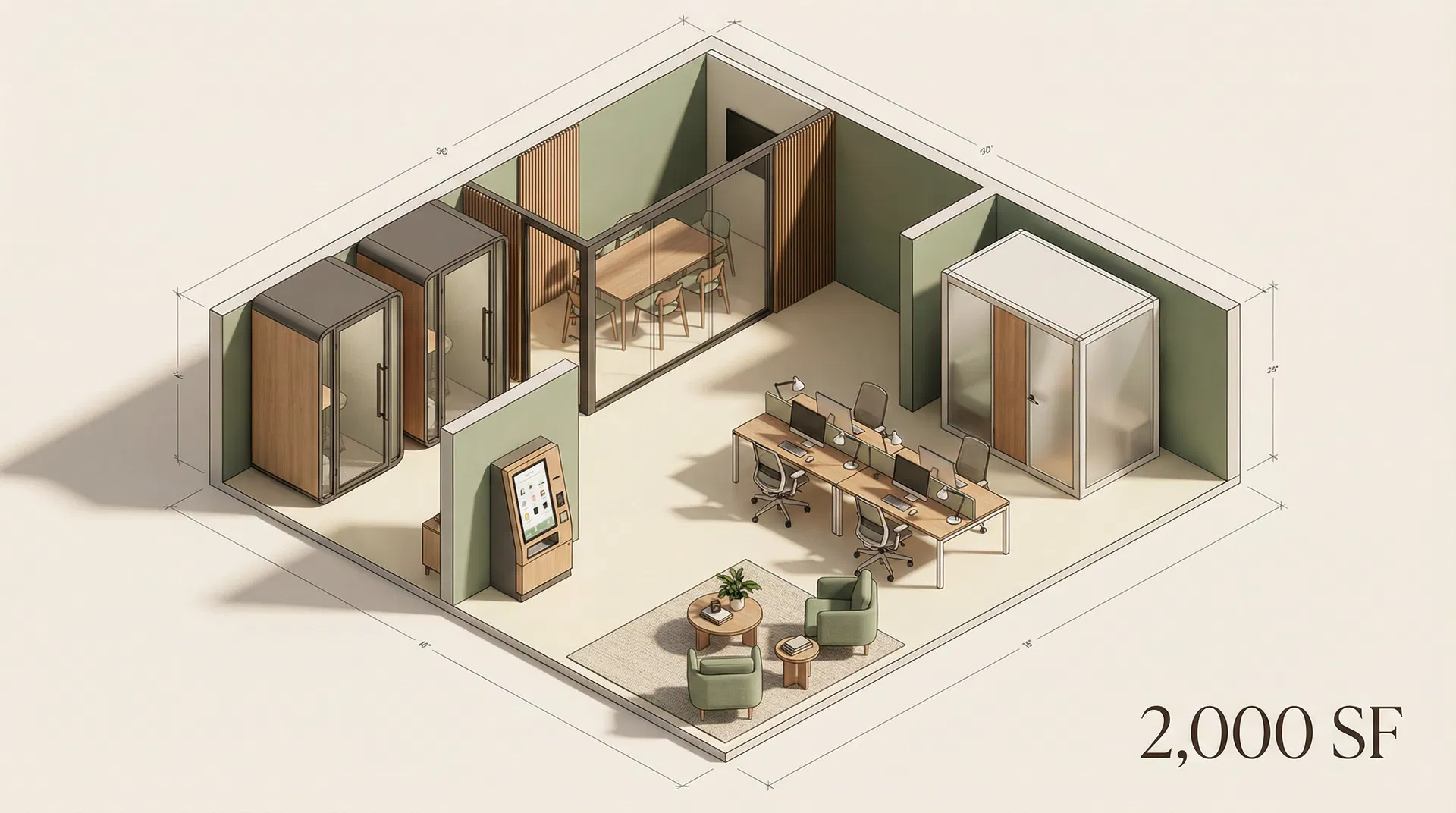
Standard Village — 4,000 sq ft
Commercial ground floor or dedicated amenity floor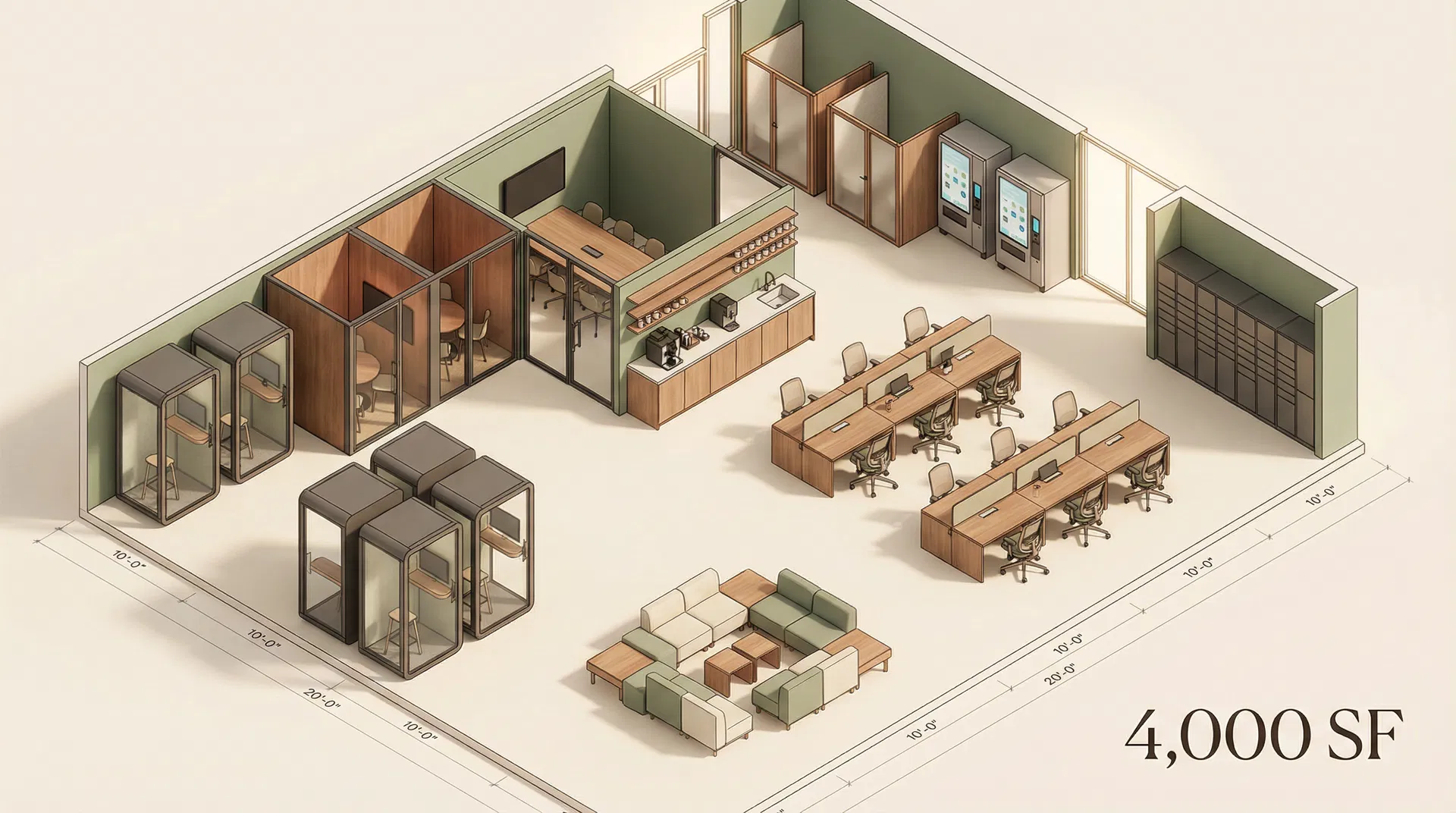
Full Village — 8,000 sq ft
Large commercial property or campus deployment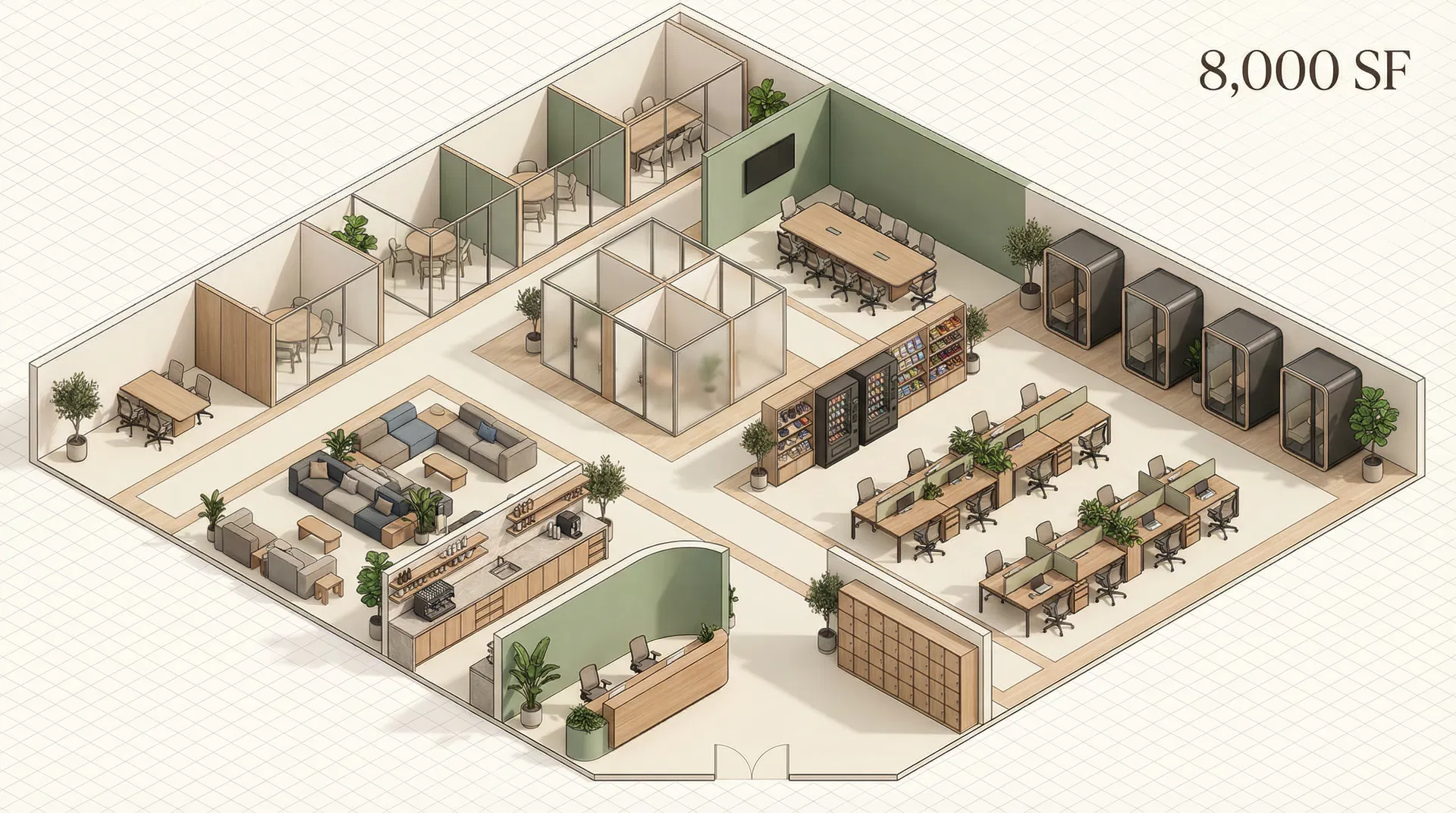
Commercial &
Multifamily
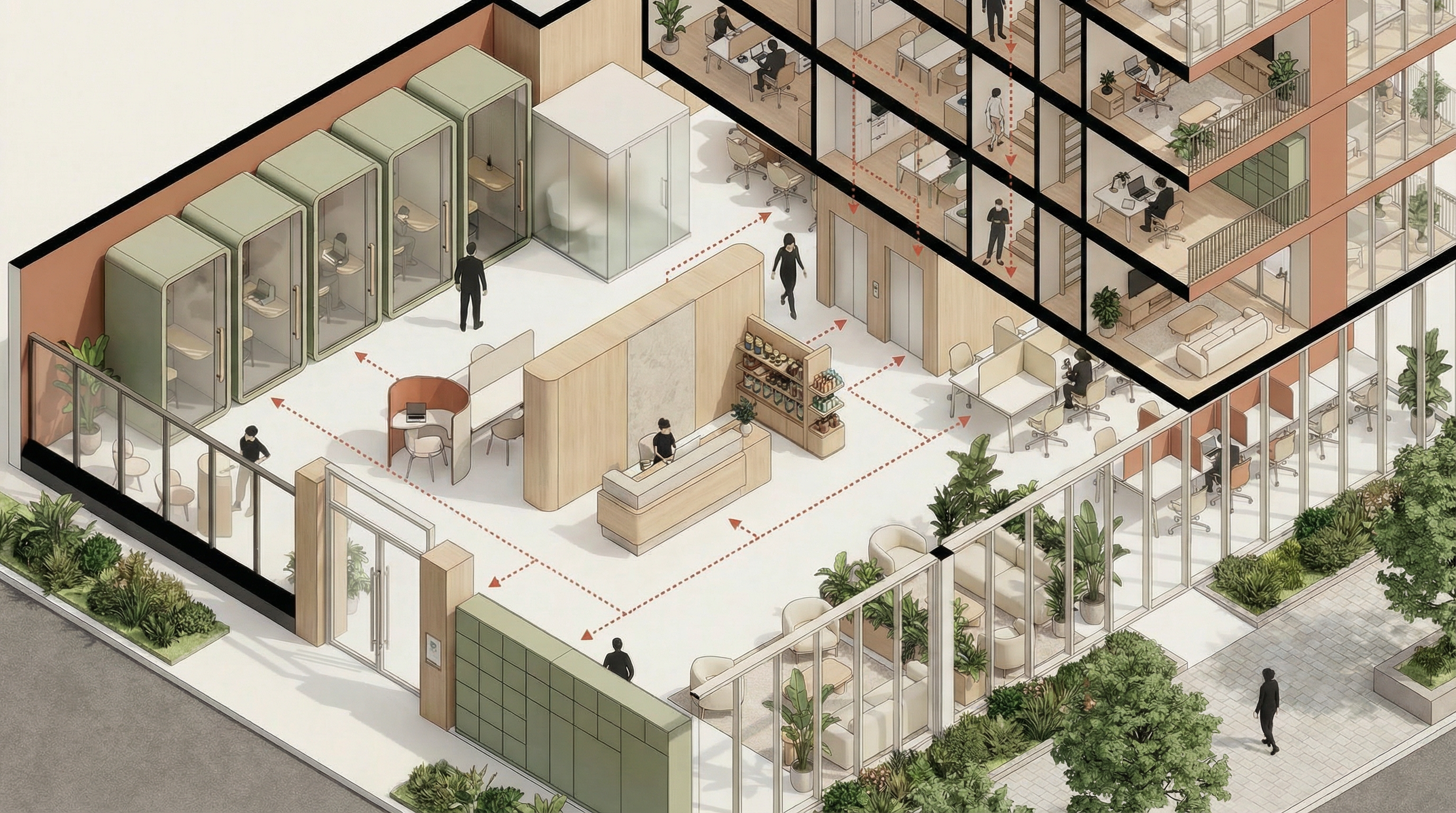
Multifamily & Apartment Complexes
Coworking is the hottest apartment building amenity. Remote workers need professional workspace without the commute. The Village gives multifamily properties a competitive edge in attracting and retaining residents — particularly the growing hybrid workforce that needs more than a kitchen table.
Commercial Office Buildings
With vacancy rates that peaked at 20.6% and remain elevated at 17.6% as of early 2026, commercial landlords need to activate empty space immediately. The Village transforms ground floors, vacant suites, and underutilized amenity floors into revenue-generating, tenant-retaining ecosystems — all while keeping the landlord's brand front and center.
"Shared flex components — lounges, meeting rooms, cafés, and collaboration zones — function like amenities already included in the load factor. Treating them as such aligns building economics with hybrid work patterns."
— Allwork.space, "The Office Amenity Missing From The Load Factor Equation"
The future of work
isn't a place.
It's an ecosystem.
The Flex Village is a turnkey solution that activates underutilized space, generates compounding revenue, retains tenants, and positions the landlord at the center of the tenant relationship — powered by Proximity.
The hospitality-focused operating platform for modern commercial real estate